home
network basics
network operations
network policy
partner benefits
build a node
data exchanges
develop schema
standards
progress
grants
press room
message board network wiki alerts


archivescontactscalendar

  toxic release inventory - TRI

Status: In Production

Important Note on 2009 TRI Reports: The XML schema and documentation that supported Release Year 2008 will also be used to support Release Year 2009 reports. There are no changes to the XML schema, Flow Configuration Document, or Data Exchange Template for Release Year 2009.

Data Flow Implementation Guide – This guide provides a high-level overview of the data flow including advice about when to consider implementing the flow and a summary of planned improvements to the flow’s design and usability.

data exchange description

The Toxic Release Inventory is a U.S. EPA program enacted as part of the Emergency Planning and Community Right to Know Act (EPCRA) of 1986.
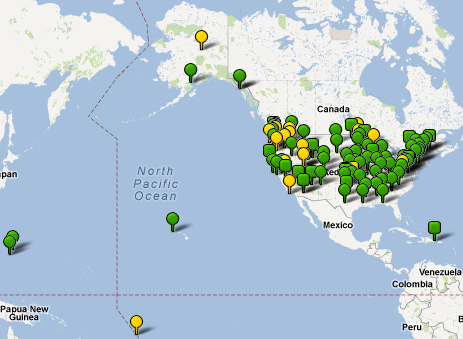
Every year, tens of thousands of facilities in the United States submit reports to EPA and the States on releases and transfers of certain toxic chemicals. This data exchange allows EPA's Central Data Exchange (CDX) to automatically forward copies of electronic TRI submissions to state Exchange Network Nodes. The TRI data exchange allows states to receive raw TRI data in real time. It also reduces the burden on reporting facilities, allowing them to submit only once through CDX, with the data being sent to both EPA and their state simultaneously. Facility submissions sent directly through CDX to EPA and the states are known as the "Stage 1" submissions.

Download the TRI Success Story to learn more...

"Stage 2" of the TRI data exchange was established in 2006. Stage 2, allows states that join the TRI State Data Exchange to save resources usually spent for data entry and reconciliation by getting their entire state’s data set electronically via CDX. This includes data that is submitted on diskette or paper or by a first time filer. (Note: When a facility makes a paper or diskette submission or files for the first time, it is still required to report to both U.S. EPA and the state in which it is located.) An updated Memorandum of Agreement (MOA) that outlines some of the business rules associated with this new service is presented below.

The TRI Program holds monthly conference calls on the TRI Data Exchange. To receive notifications about these calls, please contact Zachary Scott at Scott.Zachary@epa.gov.

implementation resources

Reporting Year 2009 & 2008 - v4.0

Please note that version 4.0 of the TRI XML schema and documentation will be reused to support Release Year 2009 reports. There are no changes to the XML schema, Flow Configuration Document, or Data Exchange Template for Release Year 2009.

The NTG Conformance Committee has received and reviewed the TRI documentation package and deemed the schema and supporting flow documentation acceptable for use on the Exchange Network. The following links are to implementation resources for the TRI data exchange version 4.0.

For more information on the schema and documentation review, you can read the developer's Schema Conformance Report and the accompanying NTG Conformance Review. For additional information on the review process, please visit the section on Publishing a Data Exchange.

Reporting Year 2007 - v3.0

The following resources were used for reporting year 2007. Network partners should not map to these XML schemas for the current reporting cycle.

Reporting Year 2006 - v2.0

The following resources were used for reporting year 2006. Network partners should not map to these XML schemas for the current reporting cycle.

Reporting Year 2005 - v1.2

The following resources were used for reporting year 2005. Network partners should not map to these XML schemas for the current reporting cycle.

Reporting Year 2004 - v1.1

The following resources were used for reporting year 2004. Network partners should not map to these XML schemas for the current reporting cycle.

memorandum of agreement

States participating in the TRI data exchange must complete a Memorandum of Agreement with U.S. EPA that outlines the specific roles and responsibilities between the State and EPA for the purposes of successfully transmitting TRI data via the Exchange Network. You can download a model MOA below.

supplemental information

TRI Form A and Form R Stylesheet Viewers
Interested in viewing your TRI XML data in the more familiar Form A and Form R formats? Click here to download an XSLT file that will mark up the TRI Form A and TRI Form R .xml files to a human readable format. This style sheet assumes that the .xml files are well formed according to the TRI 4.0 schema.

TRI-ME Download
More information and download instructions for U.S. EPA's TRI reporting software called TRI-ME is available on the EPA website.

Pilot Project Lessons Learned
The States of Michigan, South Carolina, Virginia, and Indiana participated in the pilot project that launched the TRI data exchange. Each state compiled a Lessons Learned document to help other partners better understand the implementation process and anticipate challenges before beginning.

2005 TRI Data Exchange Meeting
You can find additional information on the TRI Data Exchange by visiting the page dedicated to the TRI-State Data Exchange Meeting held in September 2005. The page contains links to the agenda and presentations that were distributed at the meeting.

contact information

For more information on the Toxics Release Inventory data exchange, please contact:

Zachary Scott
U.S. Environmental Protection Agency
(202) 566-0953
Scott.Zachary@epa.gov

Joanne Robinson
U.S. Environmental Protection Agency
(202) 566-2925
Robinson.Joanne@epa.gov


© 2010 Network Operations Board
Send questions or comments about this site to gmcnelly (at) ecos dot org
Last updated: July 15, 2010