Data Exchange Description
A new version of the Facility Identification exchange (FacID v3.0) is now available for download. Although EPA will continue to support version 2.3 in the near term, Network Partners should now migrate to version 3.0.
Data Flow Implementation Guide – This guide provides a high-level overview of the data flow including advice about when to consider implementing the flow and a summary of planned improvements to the flow’s design and usability.
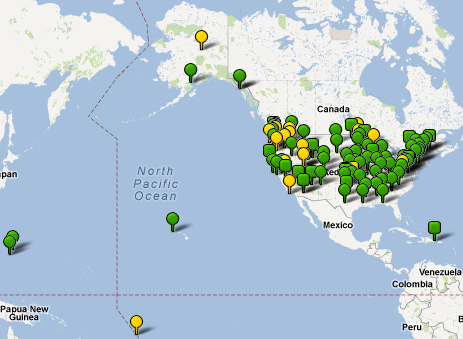
Network partners can use the Exchange Network to share information on facilities, sites, monitoring stations, and other place-based areas subject to environmental regulation or of environmental interest. Over the last four decades EPA and States have worked to improve their integration of environmental information beginning with data on regulated facilities. States, EPA, and other Network Partners have implemented exchanges of facility data between EPA’s Facility Registry System (FRS) and similar systems owned by Partners. Exchange Network Partners are pursuing these cross-agency and cross-system facility exchanges to
- Take advantage of investments States have made in integrated facility data to improve the data in EPA’s FRS and vice versa through the ‘cross pollination’ of these systems’ reconciled data; and
- Provide facility data to State or EPA Partners for value-added integration in their own applications and services, for example:
- For other EPA programs, such as the Chesapeake Bay Program.
- To assess cross-jurisdictional environmental issues (e.g., to support emergency response situations that cross state borders).
- To combine facility data across intra-state agencies (e.g., integrating pesticide storage and application facilities that originates within a state’s Department of Agriculture).
Version Notes
Status: Supported
The FacID v3.0 documentation package has been received and reviewed by the NTG Conformance Committee.The Committee has deemed the schema and supporting flow documentation acceptable for use on the Exchange Network. Implementation resources for this most recent version follow.